Introduction
Chemical reactors are critical equipment in many chemical and process industries. They are used for carrying out controlled chemical reactions while providing the required mixing, heating, cooling, pressure control, and process conditions.
Regular maintenance is essential to keep a chemical reactor operating safely and efficiently. Proper maintenance can help identify problems at an early stage, reduce unexpected downtime, maintain product quality, and extend equipment service life.
Whether you are operating a stainless steel reactor, jacketed reactor, or limpet coil reactor, a planned maintenance program should be an important part of plant operations.
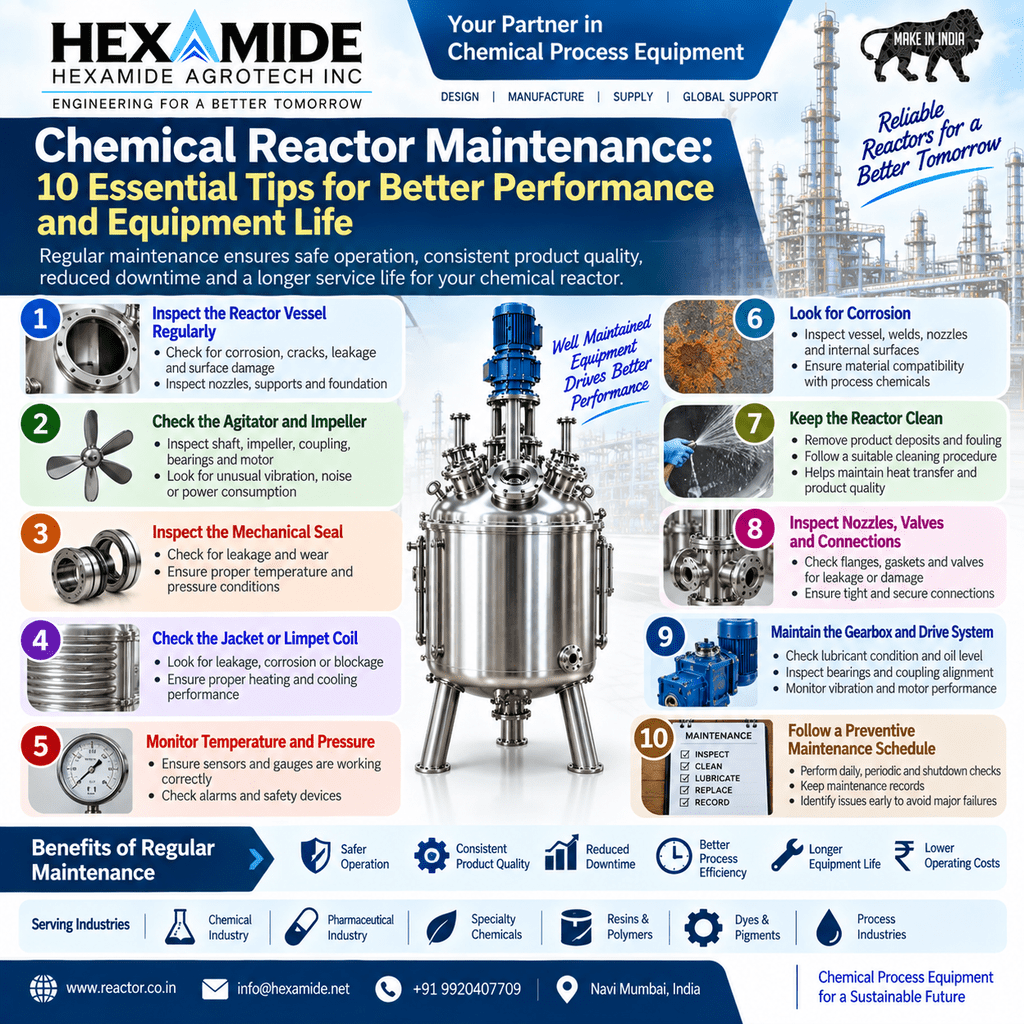
Here are 10 essential maintenance practices for chemical reactors.
1. Inspect the Reactor Vessel Regularly
Regular visual inspection of the reactor vessel is the first step in preventive maintenance.
Check the vessel for:
- Corrosion
- Cracks or visible damage
- Leakage
- Surface deterioration
- Abnormal discoloration
- Damage around nozzles and connections
- Condition of supports and foundation
The frequency and extent of inspection should be based on the reactor design, process conditions, materials, operating history, and applicable inspection requirements.
2. Check the Agitator and Impeller
The agitator is one of the most important moving components of a chemical reactor.
Inspect the:
- Agitator shaft
- Impeller
- Coupling
- Bearings
- Gearbox
- Mechanical seal
- Motor
Unusual vibration, noise, increased power consumption, or changes in mixing performance can indicate a developing mechanical problem.
Regular inspection can help prevent an agitator problem from affecting production.
3. Inspect the Mechanical Seal
Mechanical seals are important for preventing process material from escaping around the agitator shaft.
During maintenance, check for:
- Leakage
- Seal wear
- Abnormal temperature
- Pressure-related issues
- Damage to seal components
The appropriate inspection and replacement interval depends on the process, seal design, operating conditions, and manufacturer recommendations.
4. Check the Jacket or Limpet Coil
For reactors equipped with heating or cooling systems, the jacket or limpet coil should be inspected periodically.
Check for:
- Leakage
- Corrosion
- Blockage
- Pressure problems
- Reduced heating or cooling performance
- Unusual temperature differences
If the reactor is taking significantly longer to heat or cool than normal, the heat-transfer system should be investigated.
5. Monitor Temperature and Pressure
Temperature and pressure are critical operating parameters in many chemical processes.
Ensure that:
- Temperature sensors are functioning correctly
- Pressure indicators are working
- Control systems are responding properly
- Alarms are operational
- Safety devices are maintained according to applicable requirements
Accurate instrumentation helps operators identify abnormal process conditions before they become more serious.
6. Look for Corrosion
Chemical reactors can be exposed to aggressive chemicals, elevated temperatures, moisture, and cleaning agents.
Corrosion can occur on:
- Vessel surfaces
- Welded areas
- Nozzles
- Agitator components
- Jackets or coils
- Connections
The material of construction should be compatible with the process chemistry and operating conditions.
If unexpected corrosion is observed, the cause should be investigated rather than simply repairing the affected area.
7. Keep the Reactor Clean
Product deposits can affect both reactor performance and product quality.
Fouling may occur because of:
- Polymerization
- Crystallization
- Product buildup
- Suspended solids
- Chemical deposits
A suitable cleaning procedure should be established according to the process material and reactor construction.
Cleaning also makes it easier to identify corrosion, cracks, damaged surfaces, and other abnormalities during inspection.
8. Inspect Nozzles, Valves and Connections
The reactor contains several connections for charging, discharging, instrumentation, heating, cooling, venting, and other process functions.
Inspect:
- Nozzles
- Flanges
- Gaskets
- Valves
- Piping connections
- Instrument connections
Pay particular attention to signs of leakage or damage.
Loose or damaged connections can lead to process losses and safety concerns.
9. Maintain the Gearbox and Drive System
The agitator drive system requires appropriate maintenance to ensure reliable operation.
Depending on the equipment design, maintenance may include:
- Checking lubricant condition
- Checking oil levels
- Inspecting bearings
- Checking coupling alignment
- Monitoring vibration
- Inspecting motor performance
Always follow the gearbox, motor, and drive manufacturer’s maintenance recommendations.
10. Maintain a Preventive Maintenance Schedule
A documented preventive maintenance program is better than waiting for equipment failure.
The maintenance schedule can include:
Daily checks
- Temperature
- Pressure
- Vibration
- Leakage
- Unusual noise
Periodic checks
- Mechanical seal
- Agitator
- Gearbox
- Valves
- Instrumentation
- Jacket or limpet coil
Planned shutdown inspections
- Vessel condition
- Internal components
- Welds
- Corrosion
- Agitator shaft and impeller
- Heat-transfer surfaces
The actual inspection intervals should be determined according to equipment design, service conditions, operating history, and applicable standards.
Common Signs That a Reactor Needs Attention
Operators should not ignore changes in normal reactor performance.
Some warning signs include:
- Increased vibration
- Unusual noise
- Leakage
- Longer heating or cooling time
- Reduced mixing efficiency
- Unexpected temperature variation
- Increased motor load
- Pressure fluctuations
- Corrosion
- Repeated mechanical seal problems
Identifying these symptoms early can help reduce unplanned downtime.
Why Preventive Maintenance Matters
A properly maintained chemical reactor can provide several operational advantages:
- More reliable production
- Consistent mixing performance
- Better temperature control
- Reduced unexpected downtime
- Improved equipment reliability
- Better process safety
- Longer service life
Maintenance should be treated as part of the overall process strategy rather than simply as a repair activity.
Conclusion
Chemical reactor maintenance plays an important role in safe and reliable plant operation. Regular inspection of the vessel, agitator, mechanical seal, heating and cooling system, instrumentation, gearbox, valves, and process connections can help identify potential problems before they lead to major equipment failure.
Whether operating a stainless steel chemical reactor, jacketed reactor, or limpet coil reactor, maintenance should be planned according to the specific equipment design and process conditions.
At Hexamide Agrotech Inc, we manufacture chemical reactors, stainless steel reactors, jacketed reactors, limpet coil reactors, reaction vessels, mixing tanks, and other chemical process equipment for industrial applications.